


Best Practices for Framing Medals, Trophies, and Collectibles

Framing a photo or a print is predictable. They’re flat and forgiving. Framing your collectibles such as medals or trophies, however, is not. They’re three-dimensional, weird-shaped, and made from a mixture of glass, plastic, ribbons, timber and more.
Each of these elements react differently to light and humidity, and each needs to be mounted and framed in their own special way. You can’t mount and frame them like you would a photo.
At Master Framing, we've spent over two decades working with keepsakes that matter, from military service medals to grand final trophies, so we know these pieces need a different approach from the ground up.
In this guide, we'll walk through what to consider when framing medals, trophies, and collectibles, so your achievements are preserved properly and displayed the way they deserve.
Why Medals, Trophies, and Collectibles Need Different Care to Standard Framing
Trophies, medals and your keepsakes need different care from photos and prints because they are three-dimensional. They are generally heavier than a photo and are made of mixed materials. A standard frame could crush items, or possibly won’t fit them in the first place, as they are designed to press flat against the glass.
Regular frames lack any depth, so you wouldn’t be able to fit medals or prize-winning ribbons beneath the glass.

The regular glass used with frames may not protect from UV light damage. Different materials react differently with UV light. Metals can be highly resistant, plastics may not be.
Special Care for Medals and Ribbons
- Deep shadow boxes: Frames for collectibles need extra depth so items do not touch the glass.
- Acid-free backing: Foam boards must be acid-free to stop fabric rot and metal rust.
- Safe mounting: Medals need clear archival thread or custom mounts instead of glue or tape.
- UV-filtering glass: Special glass is needed to block the sun to keep cloth ribbons bright.
Special Care for Trophies and Heavy Collectibles
- Sturdy support: Heavy objects need hidden metal brackets or secure shelves inside the frame to hold them in place.
- Weight distribution: The backing board must be thick wood or dense plastic, not cheap paper.
- Custom cavities: Foam layers are cut to fit the exact shape of the object. This stops it from shifting or falling.
Framing Medals: Preventing Tarnish and Preserving Ribbons
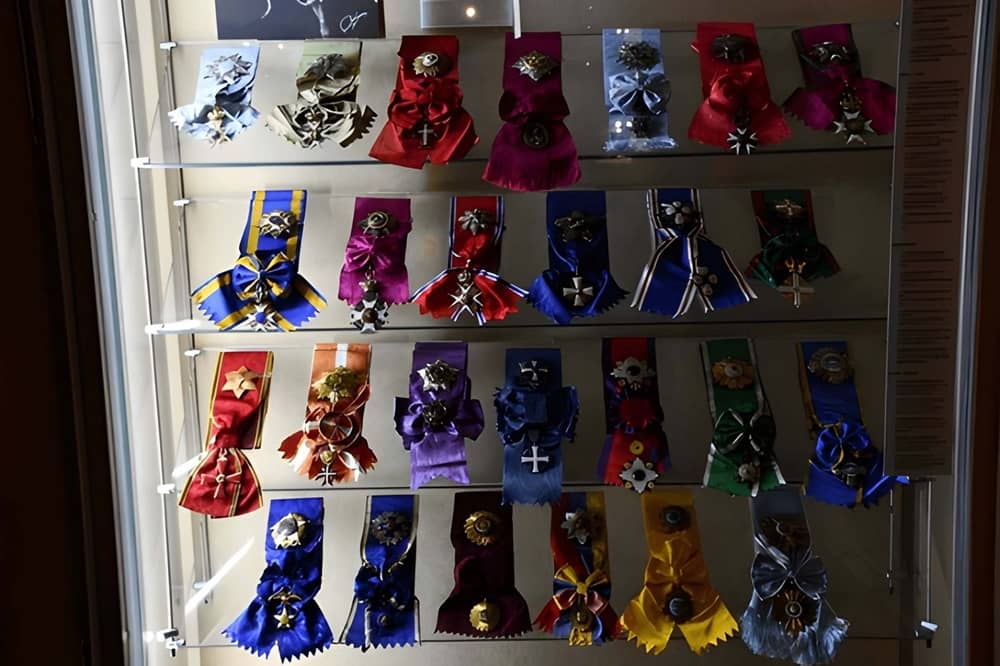
To frame and display medals you need to use conservation-grade, acid-free backing boards and UV-protective glass. The metal can be prone to rusting or corroding from mild acids, and the ribbons can easily fade if hit by strong UV light. Moisture can also tarnish the medals, so they need to be separated from the glass.
Preventing Tarnish on Metals
- Use archival materials: Use acid-free matboards and backing to stop chemical reactions that tarnish metals.
- Control environment: Hang the frame away from damp walls, heaters, or high-humidity rooms like kitchens.
- Keep space: Use a deep shadow box so the glass does not press against the metal surface.
- Avoid harsh cleaning: Clean dust gently with a soft brush before framing; never use chemical dips or abrasive polishes on historic finishes.
Preserving Ribbons
- Block UV rays: Use UV-filtering glass or acrylic to stop fabric ribbons from fading and becoming brittle.
- Avoid direct adhesives: Never apply tape, hot glue, or regular glue directly onto original fabric ribbons.
- Secure carefully: Stitch medals down using matching archival thread through a backing board, or use non-destructive specialised mounts.
- Keep flat and uncreased: Do not fold or pinch ribbons tightly when arranging them inside the display.
Framing Trophies: Handling Mixed Materials and Awkward Shapes
You need a deep shadow box to safely and stylishly frame a trophy. Use a heavy-duty acrylic or rubber adhesive plinth to anchor the base. If there are any unstable elements, use clear monofilament straps. This keeps things secure while remaining invisible, preserving the trophy's presentation for onlookers.
Assessing and Preparing
- Wood: Protect wood bases from chemical glues by using non-reactive, conservation-safe fasteners or mechanical mounts.
- Glass: Clean gently and ensure glass components do not rest directly against the frame's glazing to prevent pressure fractures.
- Disassembly: Separate removable plates, ribbons, or loose plastic components if they threaten to shift or scratch other delicate parts inside a sealed display.
Securing Awkward and Irregular Shapes
- Plinth Mounting: Create a small internal shelf or foam-core platform to support heavy or uneven bases securely.
- Custom Harnesses: Cut clear Mylar strips or use invisible fishing line (monofilament) looped through the backing board to tie down protruding parts.
- Adhesive Selection: Use industrial rubber or museum putty adhesives only on non-porous, flat contact points that will not peel finishes or leave permanent stains.
Final Assembly and Environmental Care
- Shadow Box Depth: Choose a frame box deep enough so that the tallest point of the trophy maintains a safe clearance from the front glass or acrylic face.
- Sealing: Dust the interior completely, secure the backing with framing points, and seal the perimeter edges with professional framing tape to keep out humidity and pests.
Fragile and Ceramic Collectibles: Support Without Contact Damage
Framing delicate ceramic collectibles inside shadow boxes requires mechanical cradles, custom-moulded inert mounts, or invisible Ready America Museum Gel adhesives to immobilise weight safely without pinching, gluing, or causing contact abrasion to fragile porcelain surfaces. You need to secure your collectibles, which are often shaped strangely, without it appearing obvious. Collectibles like these need the same contact-free thinking as medals and trophies, just adapted to fragile surfaces.
Core Principles for Contact-Free Support
- Custom Cradles: Build recessed acrylic or brass supports shaped to the base contour.
- Inert Padding: Line any direct pressure points with chemically stable polyethylene foam.
- Weight Distribution: Shift gravity load entirely to the base rather than vertical edges.
- Adhesive Anchoring: Use removable Museum Gel under the base for flat display decks.
Environmental and Framing Protection
- Clear Spacing: Maintain a wide gap between the ceramic surface and front glazing.
- Sealed Backing: Use archival, acid-free backing boards taped tightly to block dust.
- UV Glazing: Protect decorated and glazed colors from fading with specialised filters.
Why Professional Framing Beats DIY for Valuable Collectibles
Professional framing uses high-quality products that are designed to showcase your memorabilia and protect them from damage. Your keepsakes are framed using acid-free materials, UV-filtering glass and non-invasive mounts that prevent long-term damage and fading.
DIY framing kits are often cheap so you save money. They have plastics and acidic cardboard. So while you can mount and frame your trophies and medals quickly and easily, they won’t look as good as a professional, and your valuables won’t last as long against the elements.
Material and Preservation Benefits
- Acid-Free Environment: Conservation-grade backing is acid-free. This keeps your medals and ribbons free from damage.
- UV Protection: Professional glazing blocks harmful ultraviolet light rays that fade signatures, inks, and fabrics.
- Reversible Mounting: Experts use specialised hinges or photo corners instead of destructive adhesives, ensuring the item remains unaltered.
Structural Integrity and Presentation
- Custom Fit and Support: Heavy items like jerseys, medals, or thick art prints require internal spacers and custom support to prevent sagging and humidity damage.
- Sealed Backing: Professional frames are dust-proofed and sealed against environmental pollutants and insects.
- Resale Value: Certified or cleanly framed pieces signal authenticity and care to future buyers, commanding higher prices on the secondary market.
Preserving What Matters, the Right Way
Framing medals, trophies, and collectibles the right way means the stories behind them last as long as the memories. Getting the framing right, from acid-free backings to UV-filtering glass and custom mounts, means your keepsakes stay protected and on display for decades to come, not tucked away in a box for safekeeping.
At Master Framing, we bring the archival materials, technical know-how, and careful hands needed to give every piece the presentation it deserves. Whether it's a service medal, a grand final trophy, or a delicate ceramic collectible, we'll help you find the right approach to keep it looking its best. Get in touch with our team today to start framing your collection.